Located in the heart of the Great Rift Valley, Lake Nakuru National Park is a 188 km² fenced wildlife sanctuary renowned for its flamingo spectacle, thriving rhino populations, and rich biodiversity. Its compact size, accessibility, and dramatic landscapes make it one of Kenya’s premier year-round safari destinations.
The Flamingo Phenomenon — A Living, Changing Ecosystem
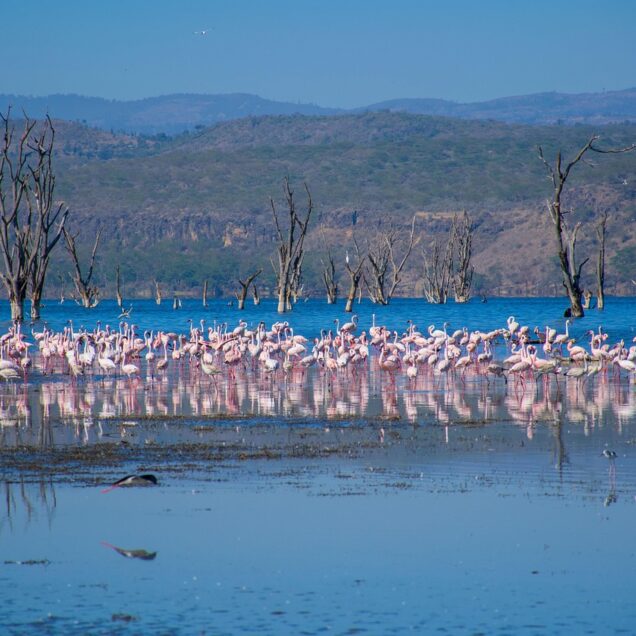
For decades, Lake Nakuru gained global fame for hosting up to 2 million flamingos, forming a sweeping pink ribbon across the lake. These enormous gatherings consisted of both Greater and Lesser Flamingos feeding on the lake’s alkaline waters.
Current Status (2026)
In recent years, rising water levels have diluted the lake’s salinity, reducing the blue-green algae (Spirulina) that Lesser Flamingos depend on. As a result:
Mega-flocks are now seasonal rather than permanent.
Flamingos frequently shift between Lake Bogoria and Lake Elementaita.
However, thousands of Greater Flamingos are still commonly sighted—especially along the southern shoreline near Naishi.
Best Viewing Tips
Top Vantage Points: Elevated spots like Baboon Cliff and Lion Hill offer sweeping views of the lake’s pink-fringed edges.
Best Time: Early morning, when lighting is soft and flocks are most active.
The Rhino Sanctuary — Kenya’s Stronghold for Endangered Giants
Established in 1983, Lake Nakuru became Kenya’s first fully fenced rhino sanctuary, designed as a secure refuge for critically endangered species.
Population & Species Breakdown (2026)
~150 rhinos in total
80% Southern White Rhinos: Grazers, often found in open grasslands or near the lakeshore.
20% Eastern Black Rhinos: Browsers, typically hidden in dense acacia forests.
Conservation Success
The rhino population has grown so successfully that the park has exceeded its ecological carrying capacity, prompting controlled relocations to other conservancies to support Kenya’s national rhino recovery plan.
Wildlife, Scenery & Highlights
Despite being relatively small, the park offers diverse habitats and an impressive concentration of wildlife.
Wildlife
Big Five Presence: The park hosts four of the Big Five (elephants are the only ones absent).
Rothschild’s Giraffes: Relocated here for protection; known for their pale legs and distinct patch patterns.
Predators:
Tree-climbing lions
Increasing leopard sightings, especially on acacia branches
Birdlife: Over 450 species, including
Great White Pelicans
African Fish Eagles
Verreaux’s Eagles
Scenic Attractions
Makalia Falls: A tranquil 10-metre waterfall, ideal for picnics and nature walks.
Hyrax Hill: A significant archaeological site with Neolithic remains dating back over 3,000 years.
Planning Your Visit
Best Time to Go
June–October and
December–February These dry seasons offer the best game viewing as wildlife gathers around scarce water sources.
2026 Entry Fees (Per Adult / Per Day)
Non-Residents: USD 90
Kenya Residents: KES 2,025
East African Citizens: KES 1,500
Getting There
By Road: Approx. 160 km from Nairobi, a 2–3 hour drive via the Nairobi–Nakuru highway.
By Air: A 25-minute flight from Nairobi to Naishi Airstrip inside the park.
Accommodation Options
Luxury: Sarova Lion Hill Lodge
Mid-Range: Flamingo Hill Tented Camp
Camping: Public sites such as Makalia, Rhino, and others for budget travellers.